Town Hall: AACTE AI Framework for Educator Preparation

When:  Wed, Sep 9, 2026 from 03:00 PM to 04:00 PM (ET)
* AI tools/personal recordings are not permitted. 

Join members of AACTE's Programmatic Advisory Committee on Innovation and Technology for a conversation about AACTE's new AI Framework for Educator Preparation—and what it means for EPPs, faculty, and future educators.
 
The framework grounds AI innovation in ethical practice, sound pedagogy, and educator expertise. Panelists will unpack its four pillars and discuss how EPPs can put them into practice.
 
The Four Pillars
Ethical and Policy Guardrails: AI literacy, privacy, equity, accessibility, transparency, and governance
Clinical Practice and Implementation: Preparing candidates to evaluate and thoughtfully integrate AI into teaching
Cognitive Architecture and Advocacy: Protecting metacognition, creativity, and critical thinking in an AI-enabled classroom
Professional Expertise and Human Judgment: Reinforcing educators' role in decisions, relationships, and culturally responsive practice
 
Panelists will explore how EPPs can evaluate AI tools, protect student agency and authentic learning, meet institutional responsibilities around privacy and equity, and build genuine AI readiness — without losing sight of what makes education human.
 
Whether your institution is developing its AI approach or just beginning to ask these questions, this town hall offers a chance to learn, ask questions, and plan next steps.

Speakers:


Anne Tapp Jaksa, Ph.D.
Professor
Saginaw Valley State University

Anne Tapp Jaksa, Ph.D., is Professor of Teacher Education at Saginaw Valley State University, where she teaches in graduate and undergraduate programs. She is Past Chair of the AACTE Board of Directors and serves on the Board of Directors of the Council for the Accreditation of Educator Preparation (CAEP). She is also President of the Michigan Association of Colleges for Teacher Education (MACTE) and previously chaired the AACTE Advisory Council of State Representatives (ACSR) Executive Committee.

Tapp Jaksa serves as NASA Jet Propulsion Laboratory Education’s Educator in Residence, Senior Research Director for the University of Michigan Center for Digital Curricula, and Co-Director of the SVSU Center for Experience Research & Design. Her scholarship focuses on educator preparation and accreditation, artificial intelligence and emerging technologies in education, continuous improvement, STEM education, and the design of innovative learning environments.

A frequent national and international presenter, Tapp Jaksa has published widely and contributes to educational communities through research, professional leadership, and board service. Her recent books include Digital Learning for Young Minds, Empowered Together, and Leveraging Artificial Intelligence to Transform Teacher Education Accreditation, published by Bloomsbury. Her recent scholarship also includes a conceptual framework for artificial intelligence in early childhood educator preparation, published by Routledge/Taylor & Francis. Across her work, she examines how emerging technologies can be thoughtfully and ethically integrated into education while preserving the central role of educators, professional judgment, and human relationships in teaching and learning.


Shannon M. Kane, Ed.D. 
Assistant Clinical Professor
University of Maryland

Shannon M. Kane, Ed.D., is an assistant clinical professor of literacy in the Department of Teaching, Learning, Policy, and Leadership at the University of Maryland. Her research examines how teachers develop as literacy practitioners. Through her work, she explores questions about critical literacy in K-12 classrooms, classroom discourse, and the ways in which identity shapes literacy practice. More recently, she has extended this line of inquiry to generative AI, where she studies how preservice and early-career teachers take up AI tools for planning and instruction, with particular attention to multilingual learners and the critical judgment teachers need to use these tools well. She designed Education in Beta, a new general education course at Maryland on technology, AI, and the future of education. Kane came to teacher education by way of international development and the inaugural DC Teaching Fellows cohort, and has worked as a classroom teacher, instructional coach, curriculum developer, and school leader. She holds a doctorate in reading, writing, and literacy from the University of Pennsylvania.


Andrea Borowczak, Ed.D.
Director & Professor
University of Central Florida

Andrea C. Borowczak, Ed.D., is director of the School of Teacher Education, and professor of science education at the University of Central Florida. Borowczak’s research is centered on integrated STEM concepts and partnership development in K-20 classrooms. Her work focuses on investigating integrated STEM and creating meaningful opportunities for all K-20 learners. Borowczak received the ASTE Award 1 - Outstanding Science Teacher Educator of the Year (2021), the ASTE Award IV - Innovation in Teaching Science Teachers (2020), and the American Society for Engineering Education PCEE Lifetime Achievement Award (2026). She has served in leadership roles for AACTE, AERA, ASTE, and ASEE. She has received over 11M in external funding, published 50+ journal articles, and presented at 225+ conferences.


Leticia De Leon, Ed.D.
Professor
University of Texas-Rio Grande Valley

Leticia De Leon, Ed.D., is a professor of teaching and learning at the University of Texas Rio Grande Valley whose scholarship focuses on educational technology, artificial intelligence in education, digital pedagogy, immersive learning, and teacher preparation. With more than two decades of experience in higher education, she specializes in designing innovative learning environments that promote engagement, ethical technology integration, and authentic assessment. Her research explores the intersection of AI, human learning, and instructional design, with particular emphasis on ethical AI implementation, AI literacy, digital learning experiences, and immersive virtual environments. She has published and presented nationally and internationally on digital pedagogy, user experience and universal design for learning, teacher digital literacy, empathy in virtual games, and AI-enhanced teaching practices. De Leon currently leads research examining the impact of ethical AI literacy training on educator preparedness and is investigating graduate students’ lived experiences, identity development, and ethical tensions within AI-enhanced learning environments.
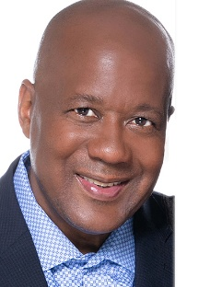


Ted Hall Ph.D.
Assistant Dean for Student Support & Clinical Associate Professor
Indiana University-Indianapolis

Ted Hall, Ph.D., serves as assistant dean for student support and clinical associate professor in the Departments of Urban Teacher Education and Africana Studies at Indiana University Indianapolis, where his leadership and scholarship advance student success through initiatives focused on academic achievement, retention, and advising. He earned his Ph.D. in Learning, Technology, and Culture from Michigan State University, where his scholarship examined the intersections of culture, learning, and human development. Throughout his academic career, Hall has taught and mentored students in the United States and Asia, with an emphasis on educator preparation and expanding educational opportunities for historically and economically underserved communities. His research examines the intersections of culture, cognition, identity, and epistemic knowledge, with particular attention to how cultural worldviews and systems of knowledge inform learning, development, and educational practice.